
The Neuroscience of Confidence in Youth Baseball
How identity, pressure, failure, and resilience shape young athletes.

A young athlete strikes out looking.
He walks back to the dugout fighting tears. He stops talking to teammates. His shoulders slump. The next at-bat he swings at everything. On the car ride home, he barely says a word while getting criticism from his parents.
A lot of adults see moments like that and think:
"It's just baseball."
But according to modern neuroscientists and sports psychology research, for many young athletes, it doesn't feel like "just baseball" at all.
At Bison Hitting Academy, one of the biggest things I've realized is that many kids today are not simply struggling with mechanics. They're struggling with pressure, comparison, fear of failure, emotional overload, and identity being tied to performance.
And research increasingly supports that reality.
Young Athletes Experience Failure as More Than "Just a Game"
According to research from developmental neuroscientists at Columbia University and UCLA, adolescent brains are especially sensitive to social evaluation, embarrassment, criticism, and comparison because the emotional centers of the brain develop faster than the areas responsible for emotional regulation and long-term reasoning.
In simple terms: young athletes often feel failure more intensely than adults realize.
The amygdala - the brain's threat-detection system - becomes highly active during moments of perceived social failure or rejection. Studies have shown that social pain activates many of the same neural pathways as physical pain.
That means a strikeout, error, or public mistake can neurologically feel threatening to a young athlete.
Not because they're weak.
Because they're human.
According to the National Institutes of Health, young athletes who strongly tie self-worth to performance are more vulnerable to anxiety, emotional dysregulation, perfectionism, and burnout.
That's why some kids:
completely shut down after failure
spiral after one mistake
become terrified of striking out
get angry during games
lose confidence quickly
stop enjoying baseball altogether
The issue often isn't effort or talent.
It's pressure.
Modern Youth Sports May Be Increasing the Pressure
Today's youth baseball environment is filled with advanced analytics, rankings, social media highlights, showcase culture, and constant comparison.
Technology absolutely has value. It can improve instruction and help players develop more efficiently.
But according to research published in the Journal of Clinical Sport Psychology, hyper-focus on external performance metrics can also increase performance anxiety and identity attachment in youth athletes.
Instead of:
"I love baseball."
Many kids begin thinking:
"My value comes from how I perform."
That's a dangerous shift.
Research on "athletic identity" - a term used in sports psychology - shows that when athletes over-identify with sports performance, setbacks become emotionally magnified because failure feels personal rather than instructional.
In other words: a bad game stops feeling like an event and starts feeling like it's who they are.
And according to the American Academy of Pediatrics, increasing pressure, specialization, and performance expectations are major contributors to rising burnout rates in youth sports.
Confidence is Not Built Through Constant Success
One of the biggest misconceptions in youth sports is that confidence comes from avoiding failure.
Research actually suggests the opposite.
According to resilience research from the American Psychological Association, confidence develops when individuals experience manageable adversity, learn healthy coping mechanism, and realize they are capable of recovering from setbacks.
That's one of the reasons I chose the name "Bison."
A bison is known for turning and facing storms instead of running away from them. While other animals retreat, the bison moves directly into adversity.
That's the mindset I want to help develop in young athletes.
Not perfection.
Resilience.
I want players to understand:
failure is a part of growth
adversity is unavoidable
mistakes are opportunities to learn
pressure does not define identity
Because eventually baseball ends for all of us.
But the character and mindset developed through it can last a lifetime.
The Emotional Environment Around Kids Matters
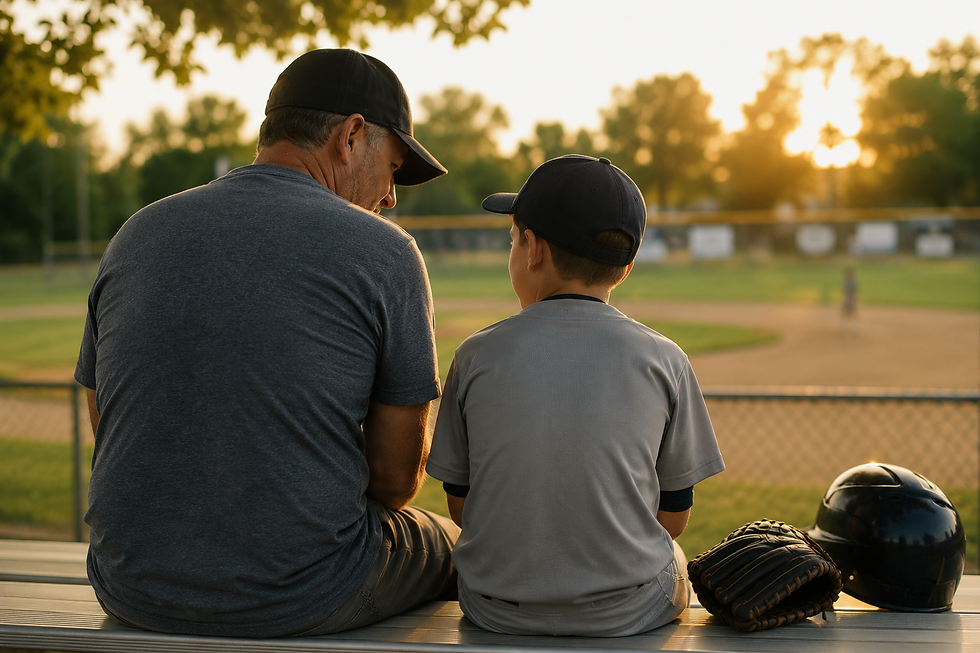
According to research from Michigan State University's Institute for the Study of Youth Sports, the emotional climate created by parents and coaches has one of the strongest impacts on whether children enjoy sports, develop confidence, and continue participating long term.
Kids often remember:
body language after mistakes
reactions after strikeouts
postgame conversations on the ride home
tone of voice
whether support felt conditional
more than they remember the score itself.
That doesn't mean parents and coaches shouldn't challenge kids.
They absolutely should.
But the healthiest developmental environments combine:
accountability
encouragement
emotional safety
perspective
growth-focused coaching
Research consistently shows that athletes improve more when mistakes are treated as a part of learning rather than personal failure.
Why Faith Changes the Conversation
This is where my faith deeply shapes how I coach.
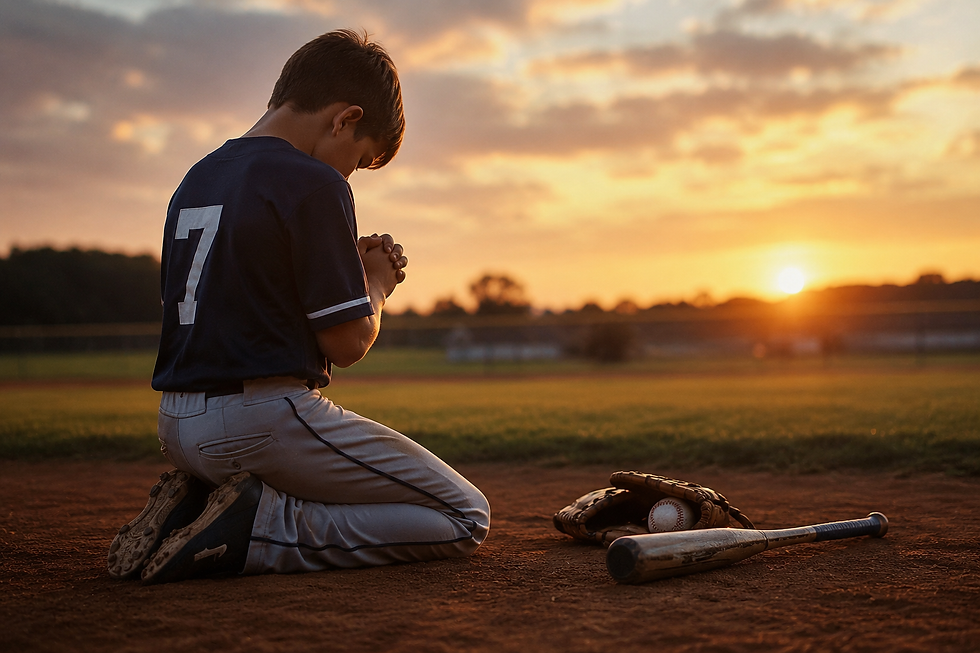
I believe every child was created by God for a purpose far bigger than baseball.
Sometimes baseball becomes a part of that purpose. Sometimes it's simply a tool God uses to shape resilience, leadership, discipline, humility, relationships, and faith.
But baseball was never meant to carry the full weight of a child's identity.
When identify is rooted only in performance:
pressure becomes overwhelming
failure becomes devastating
confidence becomes fragile
But when identity is rooted in Christ:
failure becomes survivable
pressure loses some of its power
growth becomes possible
That doesn't mean athletes stop competing hard.
It means they compete freely.
More Than Swing Mechanics
At Bison Hitting Academy, I absolutely care about developing hitters.
I want athletes to improve:
mechanics
confidence at the plate
approach
discipline
overall performance
But I also believe many young athletes need more than technical instruction.
They need:
perspective
resilience
encouragement
leadership
identity beyond statistics
someone teaching them how to handle adversity
The things I want players practicing away from our lessons are more than just their swing.
I want them practicing:
resilience
confidence
leadership
discipline
encouragement
faith
becoming great teammates
Because ultimately, success in baseball means very little if a young athlete crumbles under pressure everywhere else in life.
My goal is to help develop players who can face storms like a bison - with courage, resilience, and identity rooted in something greater than the game itself.

Comments