
The Car Ride Home Matters More Than the Game
What research says about parental pressure, confidence, and why kids quit sports.

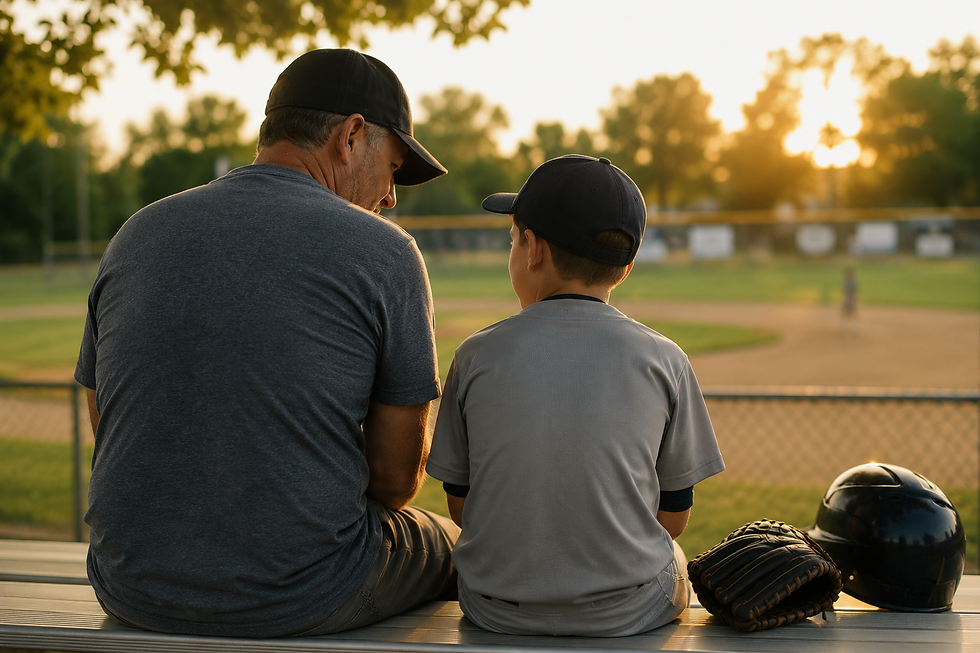
Your son strikes out twice with runners on base.
Later in the game, he makes an error in the field. You can see the frustration written all over his face before he even gets back to the dugout.
After the game, he quietly climbs into the backseat.
A few minutes pass, and eventually the conversation starts:
"You've got to focus more."
"Why can't you play like (insert other kid's name here) does?"
"You know you're better than that."
Most parents don't say things like this because they're bad parents.
They say them because they care deeply.
Because they sacrifice time, money, travel, weekends, and energy for their kids. Because they want them to succeed. Because they know their child is capable of more.
But what many parents don't realize is this:
Your child already knows he made the error.
He already replayed the mistake in his head 20 times before the inning ended. He already compared himself to the kid who made the play look easy. He already feels embarrassed, frustrated, and disappointed.
And according to research from the National Alliance for Youth Sports, pressure from parents and coaches is the number one reason kids say sports stop being enjoyable and eventually quit altogether.
That should make all of us pause for a moment.
Kids Hear More Than We Think
Research in sports psychology consistently shows that young athletes are highly sensitive to parental approval, disappointment, tone, and emotional reactions.
That means even subtle comments or reactions can carry enormous emotional weight.
A sigh after an error.
Silence in the car.
Comparing them to another player.
Immediately breaking down everything they did wrong.
To adults, those moments may feel instructional.
To a child, they can feel personal.
And over time, many young athletes begin attaching their worth to performance:
"I make my parents happy if I do well."
"I disappoint my parents when I fail."
As Christians, we should recognize how dangerous that mindset can become.
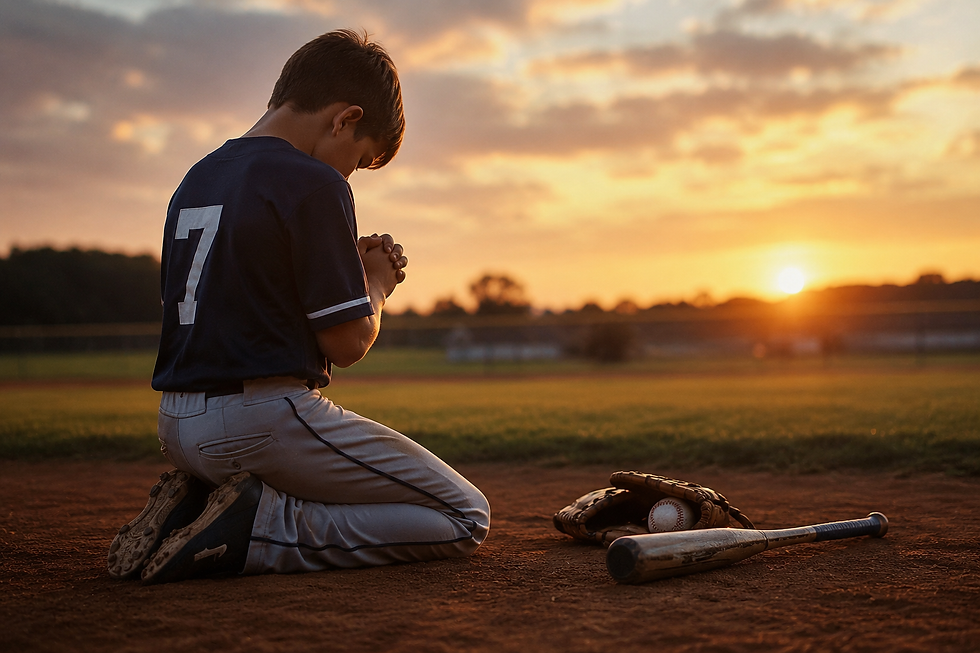
Because baseball was never meant to carry the weight of a child's identity.
Scripture Speaks to This, Too
Proverbs 18:21 says:
"The tongue has the power of life and death."
That applies far beyond major life moments. It applies in ordinary conversations, too - especially the ones that happen after hard games.
Our words as parents can either:
build confidence
reinforce identity
create emotional safety
encourage resilience
or
increase shame
deepen fear of failure
reinforce comparison
make kids feel performance determines worth
Ephesians 6:4 also says:
"Do not provoke your children to anger, but bring them up in the discipline and instruction of the Lord."
That doesn't mean we avoid coaching, accountability, or discipline.
It means the way we lead our children matters.
Especially in emotional moments.
Pressure Isn't the Enemy
Baseball is hard.
Failure is a part of the game. Adversity builds resilience. Competition is healthy. Kids need to learn accountability and perseverance.
The goal is not to remove pressure from sports.
The goal is helping kids learn how to handle pressure without believing failure changes their worth.
Because eventually, kids who fear disappointing others stop playing freel.
They start:
overthinking
tightening up
fearing mistakes
losing confidence
losing joy
And slowly the game becomes heavy.
What Kids Actually Need After Tough Games
Most kids do not immediately need a full mechanical breakdown after failure.
Usually, they need:
perspective
emotional stability
encouragement
reassurance
grace
Sometimes the most powerful thing a parent can say after a difficult game is:
"I love watching you play."
Not because they played perfectly.
Just because they're theirs.
The simple reminder communicates something every child needs to hear:
"Your performance does not change your value to me."
That's the same way Jesus loves us.
Not based on perfect performance.
Not based on achievement.
Not based on whether we succeeded that day.
Through grace.
The Better Questions to Ask After a Game
Instead of:
"Why'd you swing at that ball?"
"What were you thinking?"
"Why can't you be more aggressive?"
Try:
"What's something you learned today?"
"Did you have fun today?"
"How did you respond when things got hard?"
"What's something you were proud of?"
"Did you encourage your teammates today?"
Those conversations build resilient athletes instead of anxious ones.
More Than Baseball
At Bison Hitting Academy, I absolutely care about helping young athletes improve their swing, confidence, and overall performance.
But more importantly, I want kids to understand:
failure is a part of growth
adversity builds resilience
confidence comes from more than statistics
their identity is rooted in Christ, not performance
Because years from now, most kids won't remember every hit, strikeout, or error from their childhood.
But they will remember what the ride home felt like afterward.

Comments